People who experience homelessness often end up in emergency departments because of the challenge of accessing care in the community and failures of system coordination and integration in responding effectively to their needs.
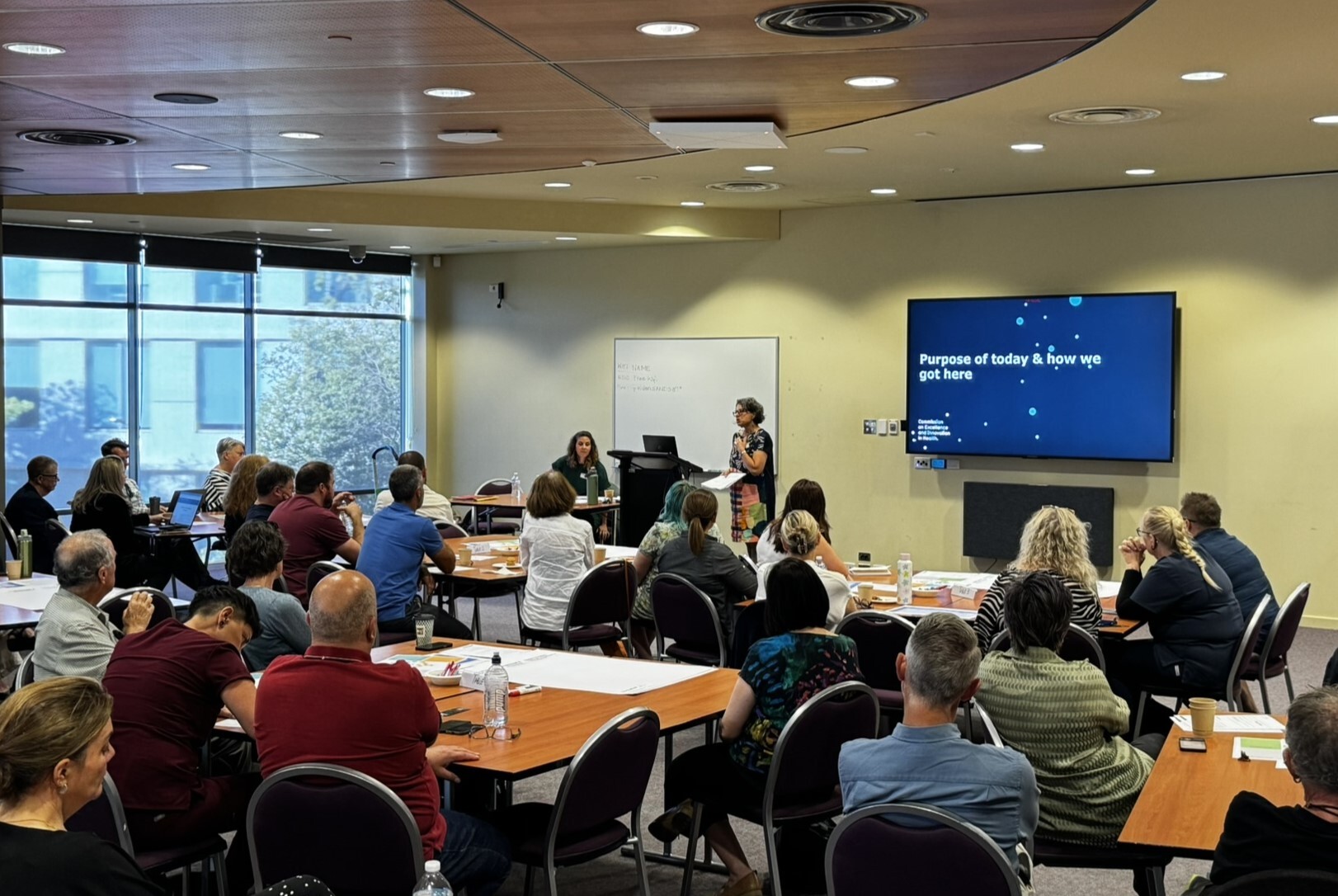
This is the heart of CEIH’s “Homelessness to Health” work: connecting health, housing and community partners to better understand what’s happening, and to develop solutions that make support easier to access and strengthen integrated responses.
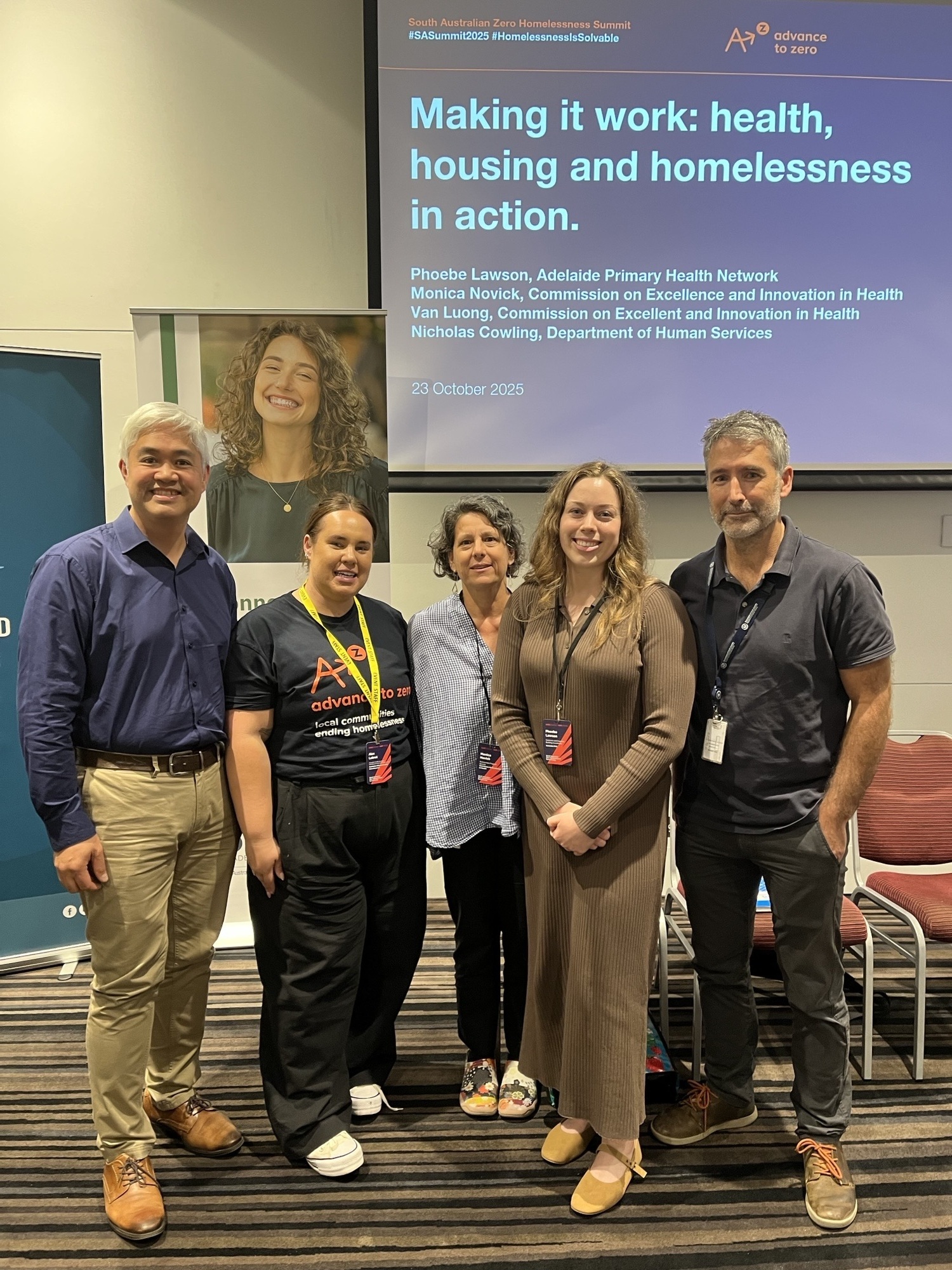
Last year the CEIH presented at the SA Zero Homelessness Summit alongside the Adelaide Primary Health Network and Department of Human Services. Together we shared how lived experience, health, housing and community partners are helping to identify opportunities to improve outcomes.
A collaborative path forward
One of those opportunities, with our partners at the Towards Home Alliance and emergency and hospital avoidance staff at the Royal Adelaide Hospital, is establishing a coordinated, cross-sector response for people experiencing homelessness who frequently attend the Emergency Department.
Instead of repeated crisis care, we are aiming for earlier, more collaborative interventions. By identifying individuals who are falling through the system and wrapping the right services around them, we can reduce avoidable presentations. We would like to thank Dr Amanda Stafford from Royal Perth Hospital for sharing her experience and evidence which has helped inform our approach.
To support integrated responses across services, work is also underway with partners to establish a cross-sector data sharing agreement to enable timely and appropriate information sharing.
Strengthening the national connection
At the national level, the CEIH has also formalised a partnership with the Australian Alliance to End Homelessness, strengthening South Australia’s connection to national, evidence-based reform efforts. As part of this partnership, dedicated leadership support will contribute to advancing the Australian Health, Housing and Homelessness Network.